Confidence · Part 9 of 11
Your Hands Were Shaking Before You Said a Word
A story about confidence, a father and a daughter, and what people see when you are nervous.
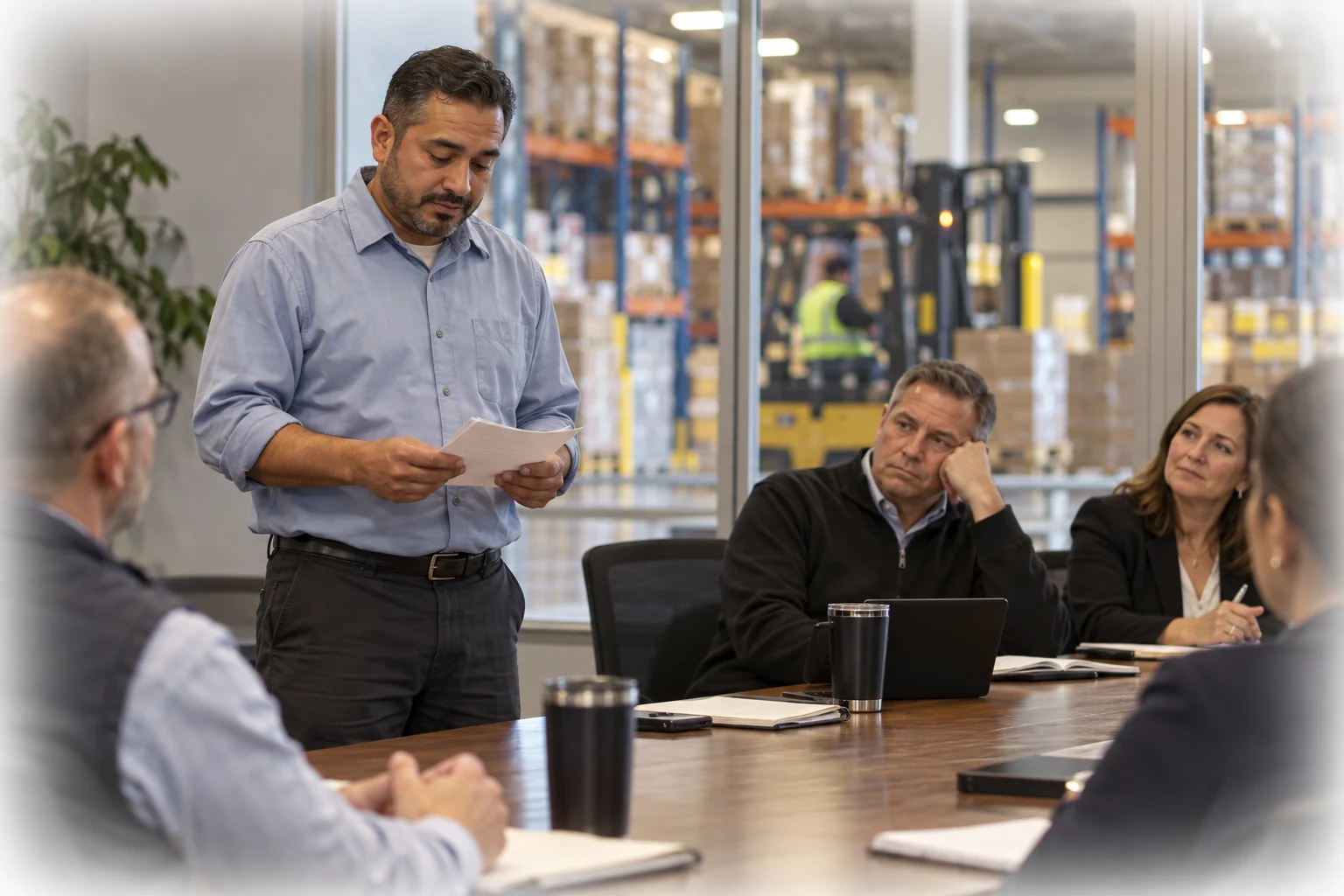
Your hands were shaking before you said a word.
You knew the material cold. You'd lived it every day for years. When your boss asked you to present to the leadership team, you said yes, because this was your chance to finally be seen.
Then you stood up. Your mouth went dry. You rushed the first slide, lost your place on the second, and heard your voice crack on a number you knew by heart. Someone at the end of the table said, "Sorry, can you speak up?" You finished four minutes early. The most important person in the room was looking at his phone.
A week later, a coworker passed along what was said afterward: "Great guy. Knows his stuff. Just not ready for more."
You know this moment even if yours happened somewhere else. The job interview answer you replayed at two in the morning. The wedding toast where your mind went blank. The parent-teacher conference where you didn't say what you'd come to say. Or your own child, who knows the answer and still won't raise their hand.
This is Luis's story, and his daughter's.
"Not ready for more"
Luis had run the second shift at a regional distribution warehouse for six years. Under him, the injury rate had dropped to the lowest in the company. He'd rebuilt the safety program almost by himself, one near-miss at a time. When regional leadership asked for a presentation on how his site did it, his general manager picked him.
He practiced for two weeks. In the parking lot that morning, he said the whole thing out loud in his truck, perfectly.
Then he walked into a conference room with nine people in collared shirts, and everything he knew went somewhere he couldn't reach.
Afterward he told himself it went fine. Then he heard the verdict, "not ready for more," and something in his chest caved in. Six years of results, and they'd been erased by eleven minutes in a conference room.
That night, at the kitchen table, he asked himself the question he'd been carrying since he was a kid who wouldn't raise his hand: How can I build my confidence when it disappears the moment it matters most?
The way you feel and the way you come across are not always the same.
What Dee saw from the back of the room
Dee ran the forklift crew and had been in the back of that conference room to answer equipment questions. The next day she found Luis on the dock.
"Can I tell you something?" she said. "You looked like you didn't believe your own numbers. You looked at the floor the whole time. You said 'I think' before everything, even the stuff you know better than anybody alive." She shook her head. "Luis, you're the reason half this crew still has all their fingers. And in that room, you came across like you were apologizing for it."
It landed like a punch. He had felt nervous. He'd never imagined how it looked from the outside. The perception in that room hadn't been about what he knew. It had been about what they saw, and what they saw was a man who didn't seem to trust himself. It was no wonder they didn't either.

The same thing he'd told his daughter
That same week, Luis's nine-year-old daughter Sofia came home from school in tears. She read beautifully at home, but when her teacher asked her to read aloud in class, she froze, whispered, lost her place and sat down with everyone watching.
Luis sat on the edge of her bed and heard himself say what he always said. "Mija, you've done this a hundred times. You read to the dog every night. You read to me. You know you can do this."
Sofia looked up at him, red-eyed, and asked, "Then why can't I do it when people are watching?"
He didn't have an answer. Driving to work the next day, he realized why. He had been asking his daughter to believe something about herself that he'd never believed about himself.
So they decided, half as a joke and half as a promise, to figure it out together.
Two nods
It didn't happen overnight. It happened over months, in small moments nobody else noticed. Morning shift huddles where Luis stopped reading from a sheet of paper. A monthly all-hands safety talk he volunteered for, then dreaded, then got through. Evenings when Sofia read a paragraph to her grandmother over video, then a page, then a poem.
Some days went well. Some didn't. Every night at dinner they asked each other the same question: "What went well today?"
Slowly, Luis's confidence stopped vanishing when people were watching. So did Sofia's.
The next quarter, regional leadership asked Luis to present again. This time he opened with the story of a near-miss on the loading dock and what his crew had changed because of it. He didn't look at his notes once. He didn't say "I think." When he finished, the regional director, the same man who had been on his phone, asked three questions, then pulled Luis aside.
"Whatever you're doing with your safety program, I want every site doing it. Would you train their supervisors?"
Within the year, Luis was promoted to operations manager for the region. The man who was "not ready for more" was now teaching the thing that had once terrified him. It was an opportunity he'd been ready for all along. For the first time, people could see it.
That spring, Sofia volunteered to read a poem at her school assembly. Luis sat in the third row. Before she started, she found him in the crowd and gave a small nod, the kind that says I've got this.
He nodded back.
He had the knowledge all along. What changed was what people saw when he spoke.
What about you?
When you walk into the room that matters, the interview, the meeting, the difficult conversation, what do people actually see? Confidence, or apology? Credibility, or nerves?
Is the way you feel inside the way you come across? Is your influence shrinking every time you second-guess yourself out loud? And is someone at home watching how you handle it?
Luis had Dee in the back of the room, telling him the truth. Most people never find out how they come across. They just keep hearing "not ready yet."
See how you really come across
Confidence is part of the picture. How people respond to you is another. Gravity Sphere helps reveal the signals that may be shaping that response.
- See it. Take the free preview and start exploring how people respond to you.
- Understand it. Your Gravity Result shows how your signals may be shaping your Trust, Credibility, Influence, Visibility and Opportunity.
- Grow it. Gravity Builder gives you a structured plan to build confidence in real situations and notice how people respond.
Common questions
How can I build confidence?
Confidence grows through experience and evidence. It also helps to understand how you actually come across, because how you feel and how people perceive you aren't always the same.
Why do I lose confidence when it matters most?
Pressure makes almost everyone's nerves spike. It says nothing about your ability, even if it feels that way in the moment.
How can I help my child build confidence?
Children build confidence by trying things, succeeding a little at a time, and hearing that the people who love them see what they're capable of.
The people in this article are illustrative composites, not real clients. The patterns are real.
Which story would you like to see on video? Cast your vote →